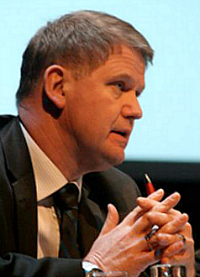
This new article by Sarah Wild, Headteacher of Limpsfiled Grange school Surrey, looks at strategies for empowering girls on autism spectrum.
Click image below to view full .pdf
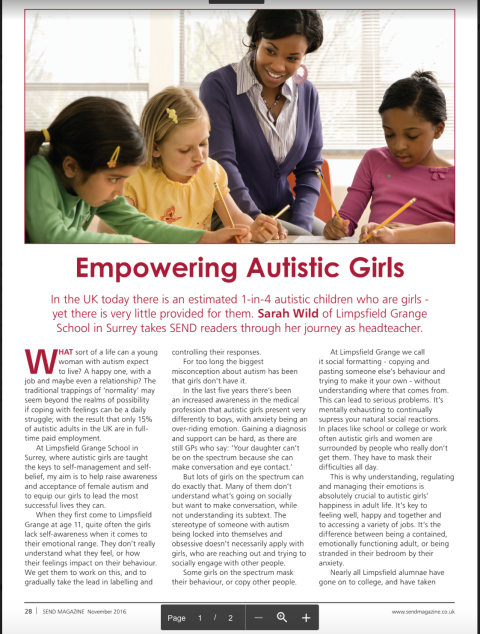
This new article by Sarah Wild, Headteacher of Limpsfiled Grange school Surrey, looks at strategies for empowering girls on autism spectrum.
Click image below to view full .pdf
New article: ‘Let’s Talk Autism’ -a school-based project for students to explore and share their experiences of being autistic
Kathryn Stevenson, Katie Cornell and Vivian Hinchcliffe
Understanding what autism means on a personal level can be an important process for young people on the autistic spectrum, and being able to reflect on this and discuss with autistic peers can be particularly helpful. However, opportunities may be restricted by reluctance to talk about diagnosis and because of difficulties in communication inherent in autism. This article describes a therapeutic media project within an ASD school that attempted to support young people to reflect together about what autism meant for them and create resources to share with others.
The process is described and main themes of discussions analysed using thematic analysis. Main themes emerged of making sense of diagnosis, experiences of difference and transition to adulthood. Various strategies to manage diagnosis and negotiate identity also emerged. Issues around informed consent and confidentiality and the therapeutic value of such groups are discussed.


In this latest issue of the SEND magazine there are articles on Girls with Autism Spectrum, and Mental Health in children with SEND.
https://issuu.com/sendmagazine/docs/send_november_2016_v04_digital
Nasen, the UK’s leading organisation supporting those who work with or care for children and young people with special and additional educational needs and disabilities (SEND), has launched a free miniguide to supporting girls with autism spectrum conditions/disorder (ASC/ASD).
Girls and Autism: Flying under the radar, is a 20-page full-colour guide designed to alert busy teachers to the hidden struggles of girls with ASC/ASD. Misunderstanding of their support needs, it suggests, may lead to unnecessary school exclusion and mental health disorders.
Behaviours stereotypically associated with autism are now widely recognised by most teachers – the high-intensity interests (e.g. trains, mechanisms, dinosaurs) and the self-regulatory and anxiety-associated behaviours (e.g. flapping, jumping, resonating noises, meltdowns). However, now researchers are warning that these behaviours are not equally indicative of ASC/ASD in both boys and girls.
‘Ironically, it seems we, as professionals, have been over-focused on the detail and not seen the bigger picture,’ says co-author Jo Egerton. ‘It is not the object of interest that is key, but the extreme intensity and duration of interest that sets girls and boys with autism apart from their typically developing peers.’
A young girl with autism may, for example, collect hundreds of identical pictures of her favourite pop star or develop an unusually encyclopaedic knowledge of fashion, Egerton says.
‘Rather than externalising their ASC behaviours, it seems that girls are more likely than their male peers to suppress them, to assiduously study and copy peers’ socially acceptable behaviours, and to adopt more internalised and invisible relief from stress (e.g. self-harm, eating disorders).’
This means that their ASC/ASD is likely to go unnoticed, she adds, unless their school knows how girls with autism ‘fly under the radar’.
The Girls and Autism miniguide – which comes out of the UK’s National Association of Head Teachers’ Autism and Girls Forum chaired by Professor Barry Carpenter CBE – is a first step for teachers in becoming more informed. It introduces the debate around autism and gender; identifies key issues for girls with ASC/ASD; provides practical school-based support strategies; shares family, professional and academic perspectives; and signposts further reading.
‘Our challenge in schools is to evolve a curriculum and pedagogy that are responsive to our new understanding of girls with ASC/ASD and their specific needs,’ Professor Carpenter says. ‘This will involve a process of inquiry, to investigate and explore, for and with the girls, how best their needs can be met.’
You can download your free copy of Girls and Autism: Flying under the radar here.
For the National Conference on Girls on the Autism Spectrum ; The BIG Shout, to be held in London on 27th January 2017.please click here http://www.naht.org.uk/welcome/naht-events/conferences/girls-on-the-autism-spectrum-the-big-shout-conference/
27 January 2017, London
There is shared concern among parents, schools, families and professionals about the vulnerability of girls on the Autistic Spectrum. What is emerging is that the presentation of autism in girls is different to boys; yet many of our diagnostic and therapeutic approaches, and interventions in education and psychology, are based on research conducted with predominantly male populations. This conference brings together school leaders, teachers, health professionals, parents and carers with high profile speakers and experts, including:
The conference will give delegates an insight of the experiences of girls on the Autism Spectrum; and prepare a ‘Call for Action’ to highlight future areas for development. to see full details and to book please click here: http://www.naht.org.uk/welcome/naht-events/conferences/girls-on-the-autism-spectrum-the-big-shout-conference/
Conference fees
Early Bird rate for all registrations – £99
(Please note that Early Bird rates are applicable to the first 50 applications received.)
NAHT Member rate – £125
Non-member rate – £150
Parent/Carer rate – £125.
To mark World Autism Awareness Day, nasen has launched a new mini – guide highlighting the needs of girls with , or without a diagnosis of Autism. Written by Jo Egerton and Barry Carpenter, with contributions from the Girls with ASC Working Party, the guide is a free download to schools and services.
The guide aims to articulate the current needs and issues surrounding girls with Autism . They are an under-diagnosed group , whose needs often go unmet in schools , and whose mental health in the teenage years often rapidly deteriorates. The Working Party, chaired by Professor Carpenter, realised that they did not have a common language to express these concerns, and their goal in preparing this Guide has been to improve the foundation knowledge and understanding in schools and other child based settings.
As their work drew to a conclusion, they realised that there was so much more to do . The Group will continue its work under the auspices of the National Association of Headteachers, and specifically the National Forum for Neuroscience in Special Education (www.naht.org.uk ). This will include a major National Conference in London early in 2017; detail will be posted on this website.
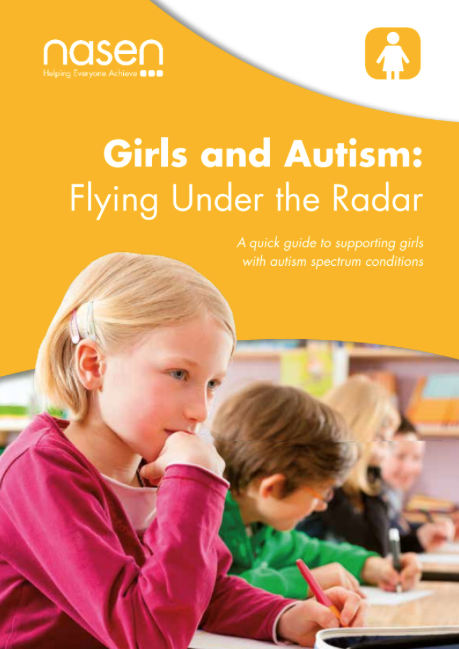
Click the thumbnail below to open and view.
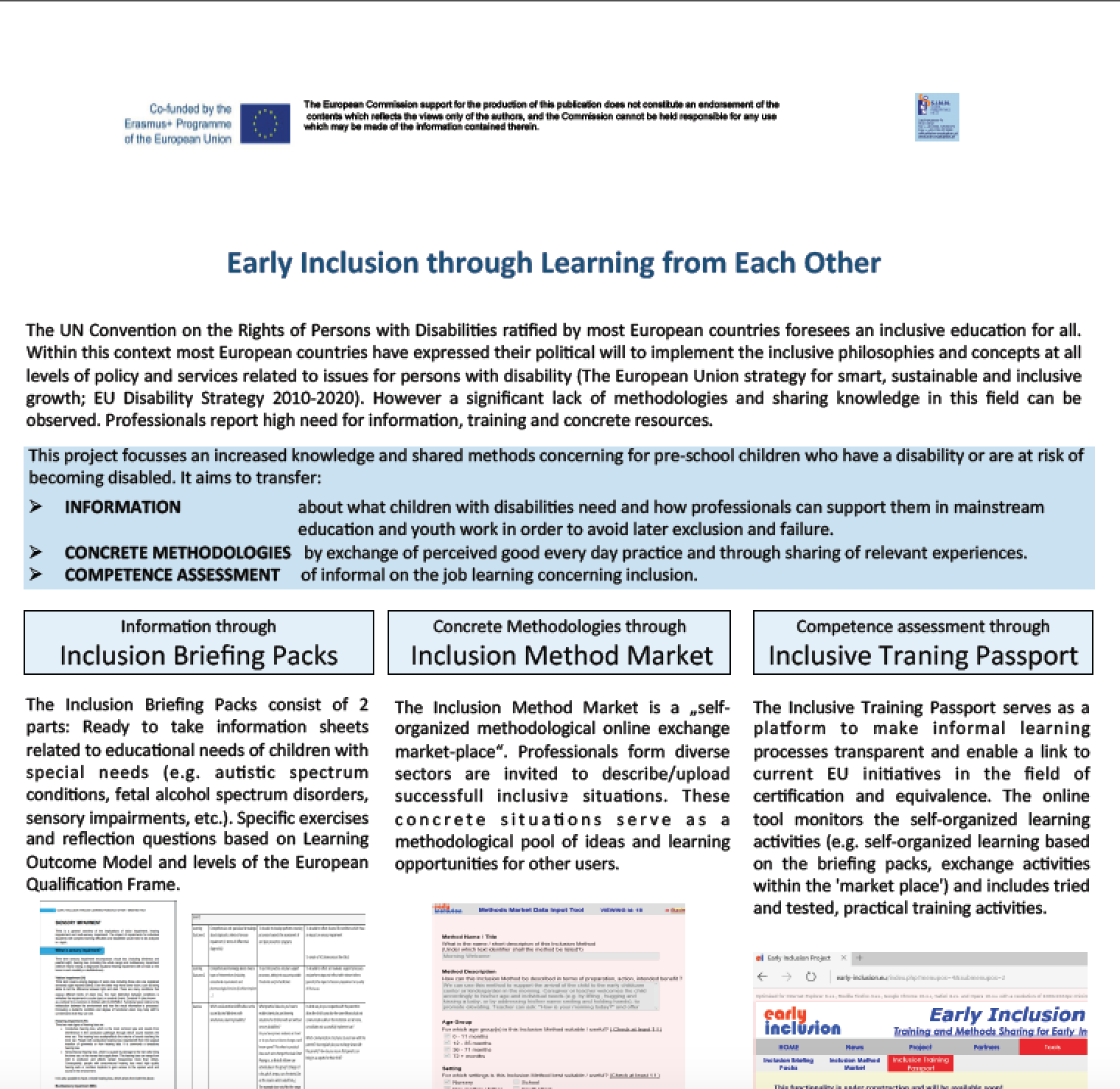
The UN Convention on the Rights of Persons with Disabilities ratified by most European countries foresees an inclusive education for all. Within this context most European countries have expressed their political will to implement the inclusive philosophies and concepts at all levels of policy and services related to issues for persons with disability (The European Union strategy for smart, sustainable and inclusive growth; EU Disability Strategy 2010-2020). However a significant lack of methodologies and sharing knowledge in this field can be observed. Professionals report high need for information, training and concrete resources. Early- Inclusion, is an Erasmus Plus Project through the European Union (www.early-inclusion.eu).
The UK is involved through, and represented by, Chadsgrove Teaching School (contact: Bev Cockbill – bac42@chadsgrove.worcs.sch.uk). Professor Barry Carpenter (UK) is the Lead Consultant to the Project, and has contributed to its design, and initial research and development approaches.
The poster below outlines the preliminary work of this Project, which has a particular focus on the development of Teaching Assistants, (and similar) in a variety of education and childcare settings.
Please click the thumbnail below to open and view the poster in full.
Click thumbnail below to download and view this pdf document.

Attached is a nasen SPECIAL in which an article on Autism and Girls appeared.
See extracted article below “Time for a rethink.”
(Click thumbnail image below to open as .pdf)
![Girls with Autistic Spectrum Condition [ASC]](https://barrycarpentereducation.com/wp-content/uploads/2016/01/nasen_article_thumbn.png)
Nasen, SEN Facts And Figures – ‘Time For A Rethink’ NASEN.ORG, 2015. full – special_extra_junel_2015_second pp (2)
 Barry Carpenter Education