
Book your place now! – Click the link below
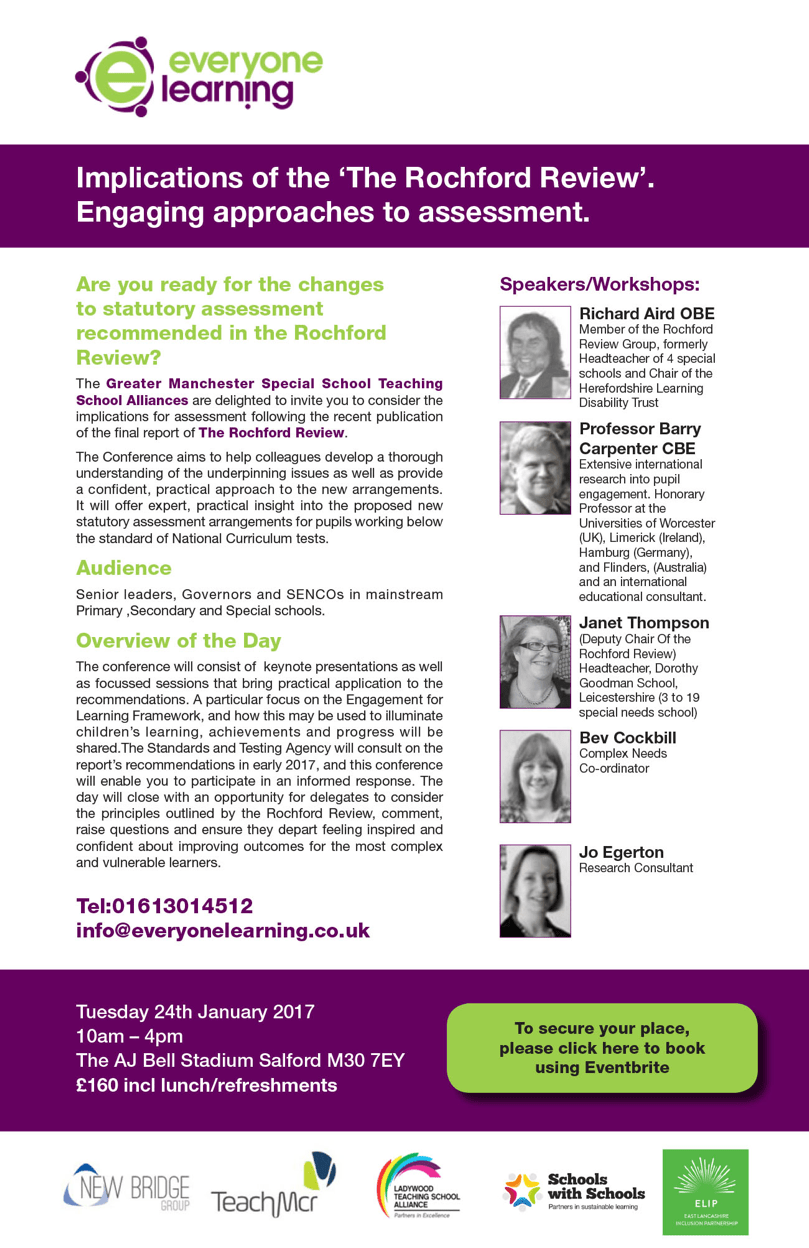
Click to view full .pdf flyer


These companion articles from the SEND journal , written by Barry Carpenter, Jo Egerton and Stas’ Samagala, are relevant to schools and settings in this time of evolving educational approaches and interventions to support children and young people’s mental health and emotional well being. As the title suggests current thinking for neuroscience is applied to the rich range of narrative based resources in the ‘Beyond Words’ series of books and on line materials.
Click the thumbnails below to open each article.


During a school Inspection Ofsed will look a 3 i’s – issue ,intervention and impact.
To look at the quality and creativity of interventions for and with children with Special Educational Needs and Disabilities , this will not rule resect the scope of teaching and learning , or the range of progress.
The attached short article , published in SEND magazine, looks at the 5 i’s of issue, inquiry, intervention, innovation and impact.
Click the thumbnail below open and download the .pdf document.

A new article for UKEdChat at GL Assessment:
http://ukedchat.com/2016/03/06/dealing-with-childrens-mental-health-issues-as-a-teacher/
The new generation of children with special educational needs and disabilities (SEND), those with complex learning difficulties and disabilities (CLDD), have transformed the special needs registers of our schools in this first part of the 21st century (Carpenter et al., 2015). Many of these children are ‘wired differently’; children born prematurely, particularly those of pre-28 week gestation, are a particular example of this phenomenon (Carpenter and Egerton, 2013). Their profile of learning is not that which we have previously known with children with SEND. This brings unique challenges to teachers, for the neural pathways in the brain of the child with CLDD are connected and routed differently, and they, thus, learn differently. Therefore, in what ways do we teach differently?
This is a debate that is beyond differentiation, and takes us into the realms of new generation pedagogy, where personalisation becomes an essential component of the differentiated process of meeting individual needs.
Key to this pedagogy – ‘how’ we teach – is engagement (Carpenter et al., 2015). For any child of any ability without authentic engagement in learning there will be no meaningful outcomes, no effective progress, no real attainment. Engagement is the liberation of intrinsic motivation and the pathway to achievement. The engagement principle, delivered through the Engagement Profile and Scale (http://complexld.ssatrust.org.uk), enables a teacher to co – produce with the child, a truly responsive learning programme. This will style itself in ways appropriate to the presentation of the child’s complex needs. Autism, for example, is not merely the ‘classic’ presentation we knew in the late twentieth century, but now has multiple causal bases, all of which generate specific learning styles. Again, engagement can be key to ensuring high quality, responsive teaching (Carpenter et al., 2016).
From the extensive Department for Education-funded research conducted in the UK by Carpenter and colleagues, a range of resources were produced and are located on http://complexld.ssatrust.org.uk. Similarly the 16 modules written to support teacher training in the area of complex needs – ‘Training Materials for Educators of Learners with Severe, Profound and Complex Learning Difficulties’ (www.complexneeds.org.uk) – are now the focus of a European Commission-funded Erasmus+ programme to make these materials more widely available in Europe via a number of European languages to support inclusion practice through accredited vocational learning.
Our challenge in this 21st Century is to create inclusive pedagogy, regardless of setting. There are children entering our schools ‘the likes of which we have never seen before’. Engagement, as a well-researched principle for learning in all children, will be key to that inclusive pedagogy. We need to design a curriculum which wraps around the child with CLDD (Carpenter et al., 2011), and takes that child on a journey of effective teaching to enable us to touch that child at their point of learning need.
Professor Barry Carpenter, January 2016
References
Carpenter, B., Carpenter, J., Egerton, J. and Cockbill, B. (2016) ‘The Engagement for Learning Framework: Connecting with learning and evidencing progress for children with autism spectrum conditions’, Advances in Autism, 2 (1).
Carpenter, B. and Egerton, J. (2013) ‘The impact of prematurity on special educational needs’, Optimus Education (SEN hub). [Online at:http://www.optimus-education.com/impact-prematurity-special-educational-needs; accessed: 7.10.13]
Carpenter, B., Egerton, J., Brooks, T., Cockbill, B., Fotheringham, J. and Rawson, H. (2011) The Complex Learning Difficulties and Disabilities Research Project: Developing meaningful pathways to personalised learning (project report). London: Specialist Schools and Academies Trust (now The Schools Network). [Online at:http://complexld.ssatrust.org.uk/project-information.html; accessed: 21.3.12]
Carpenter, B., Egerton, J., Cockbill, B., Brooks, T., Fotheringham, J. and Rawson, H. (2015) Engaging Learners with Complex Learning Difficulties and Disabilities: A resource book for teachers and teaching assistants. Abingdon: Routledge.
This week a new EU funded Erasmus Project was launched in Graz, Austria. This Project will take the extensively trialled Briefing Sheets for the UK CLDD Project (Engagement4Learning) and translate them into several European languages.
The briefing sheets will then be used to support Inclusion of children with Special Needs in the representative EU countries. The Project will go through
various trial and development phases, through to 2018.
For more information please go to http://early-inclusion.eu
The European Commission support for the production of this publication does not constitute an endorsement of the contents which reflects the views only of the authors, and the Commission cannot be held responsible for any use which may be made of the information contained therein.
For details follow this link:
This two part article, recently published in the new SEND magazine, gives an overview of the phenomena that many school are experiencing , namely that the children they identify with SEND today, are increasingly different to those they identified yesterday.
 Barry Carpenter Education